
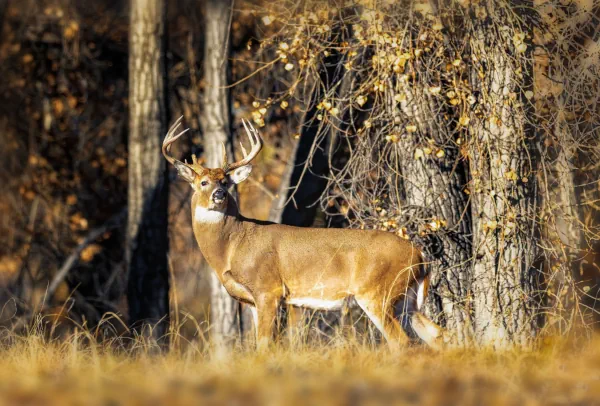
Hunting is not about the indiscriminate killing of animals, nor is it about acting out some macho fantasy. At its core, hunting is about sharing time, traditions, and experiences with family and friends while immersing yourself in the outdoors. It is the quiet excitement on a young hunter's face as they watch their first Kansas whitetail step out of a creek bottom. It is the stillness of sitting in a treestand at dawn on a crisp October morning as the prairie and timber wake up around you. It is a deeply rooted passion that millions of hunters cherish, even if those outside the outdoors community sometimes misunderstand it.
Today, however, hunters spend an enormous amount of time, energy, and resources simply defending our heritage. Modern anti-hunting organizations—often operating with massive corporate budgets and slick social media campaigns—want to see an end to all regulated hunting, and law-abiding sportsmen and women are their primary target. Over the years, hunters have had vehicles vandalized, trail cameras and stands stolen or sabotaged, and families harassed in the field and online. Yet hunters continue to take the high road, refusing to retaliate and instead advocating through science, law, and education. We simply want to pass our traditions on to our kids and enjoy the outdoors in peace.
Extreme animal rights groups try to paint a very different picture, often arguing that humans hold no moral distinction from animals. PETA founder Ingrid Newkirk famously summarized this worldview with the slogan, "A rat is a pig is a dog is a boy," and once stated that her organization would oppose medical research on animals "even if it resulted in a cure for AIDS." In the mid-1990s, activists even attacked the Make-A-Wish Foundation—dubbing it "Make-a-Death-Wish"—simply for granting a terminally ill boy's dream of going on an Alaskan bear hunt with his father.
It is time to share the truth with the non-hunting public—not just about what anti-hunting extremists stand for, but about what hunters actually do. When you look at the real-world benefits that hunters provide to wildlife and to every citizen—non-hunters included—the facts speak for themselves.
By the Numbers: Kansas & North American Wildlife Recovery (1900 vs. Today)
At the turn of the 20th century, unregulated market hunting and habitat loss had wiped out nearly every major big-game species in Kansas. By 1904, deer, elk, pronghorn, and wild turkeys were virtually extirpated* from the state. Thanks to hunter-funded trap-and-transfer programs, strict season regulations, and habitat restoration led by the Kansas Department of Wildlife and Parks (KDWP), those species are thriving across the Sunflower State and North America today:
| Metric / Species | Turn of the 20th Century (~1900–1930) | Modern Era (Current) | How Hunters Made It Happen |
|---|---|---|---|
| Kansas Deer (Whitetail & Mule) | Virtually extirpated* by 1904 (~0 resident herd until 1950s) | ~700,000 deer (~655,000 whitetail; ~45,000 mule deer) | Strict game laws, landowner partnerships, and hunter-funded management reopened the first modern season in 1965. |
| Kansas Wild Turkeys | Extirpated* across Kansas by the early 1900s | Thriving statewide (~13,800+ spring gobblers harvested annually) | Reintroduced in the 1960s–1970s via trap-and-transfer funded by license dollars and the National Wild Turkey Federation. |
| Kansas Pronghorn (Antelope) | Virtually eliminated from the Kansas plains | ~2,000+ pronghorn (primarily in western Kansas) | Reintroduced by KDWP in the 1960s–1990s; supports annual limited-draw and archery seasons. |
| Kansas Elk | Gone from Kansas by 1900 | Free-ranging & refuge herds (Fort Riley & Maxwell Wildlife Refuge) | Restored via hunter-backed reintroductions; modern hunting seasons opened in 1987 and 1990. |
| U.S. Whitetail Deer (Nationwide) | Fewer than 500,000 | 35+ million | State wildlife agencies funded through hunting licenses and Pittman-Robertson excise taxes. |
| U.S. Wild Turkeys (Nationwide) | Roughly 30,000–100,000 | 6+ million | Largest conservation success story in American history, driven by sportsmen's groups. |
| Kansas Conservation Funding (KDWP) | $0 dedicated federal wildlife restoration funds | ~$17.6M–$22M/year in federal Pittman-Robertson grants alone | KDWP receives virtually no State General Fund tax dollars—operations run almost entirely on license fees and hunter excise taxes. |
The Facts About Hunters & Conservation
- Fact: Hunters Pay for Conservation—Not Taxpayers Through the North American Model of Wildlife Conservation, hunters voluntarily tax themselves to fund wildlife habitat and management. Under the Federal Aid in Wildlife Restoration Act (the Pittman-Robertson Act), an 11% federal excise tax on firearms, ammunition, and archery gear has generated more than $16 billion nationwide since 1937. In Kansas, the Department of Wildlife and Parks receives virtually zero general taxpayer dollars. Instead, Kansas conservation is funded by hunting and fishing license sales alongside roughly $17.6 million to $22 million per year in federal Pittman-Robertson apportionments—money that protects public wildlife areas and benefits hundreds of non-game species, from songbirds and pollinators to native prairie wildlife.
- Fact: Hunting is Exceptionally Safe Despite how it is portrayed in movies and anti-hunting ads, hunting is safer than almost any mainstream recreational sport. Mandatory hunter education programs—funded directly by Pittman-Robertson dollars—have driven hunting-related incidents down by more than 70% since the 1970s. Across millions of days spent afield each year, a hunter has roughly a 0.0005% chance of suffering a fatal incident—making you statistically far more likely to be injured playing golf, riding a bicycle, or swimming, and roughly 10 to 20 times more likely to die from a bee or wasp sting than to be fatally injured in a hunting incident.
- Fact: There is No Feasible Alternative to Regulated Hunting Anti-hunting groups often promote non-lethal population control, such as trapping and relocating deer or administering wildlife contraceptives. In reality, capture-and-relocate programs cost $500 to $1,000+ per animal and carry high post-release mortality rates, while wildlife fertility drugs require repeated darting and cost thousands of dollars per deer, making them impossible outside tiny, fenced-in enclaves. Without regulated hunting, Kansas deer herds would rapidly exceed the land's carrying capacity—devastating farm crops, stripping timber regeneration, multiplying deer-vehicle collisions (which already account for roughly 10,000+ crashes a year on Kansas highways alone), and ending in mass winter starvation and communicable diseases like Chronic Wasting Disease (CWD) and epizootic hemorrhagic disease (EHD). A clean, ethical harvest is far more humane than a slow winter death from starvation or predation.
- Fact: Poachers Are Not Hunters Whenever a story hits the news about livestock, a family pet, or a protected animal being shot illegally, headlines frequently blame "a hunter." That is false. Criminals who trespass, shoot out of season, or spotlight from roadways are poachers, not hunters. Hunters despise poachers because they steal wildlife from the public and tarnish our reputation. Sportsmen actively push for felony penalties, heavy fines, equipment confiscation, and multi-year license revocations across state lines through the Interstate Wildlife Violator Compact. In fact, state wildlife agencies consistently report that over 90% of tips submitted to Turn In Poachers (TIP) hotlines—like Kansas's Operation Game Thief—come directly from ethical hunters and anglers.
- Fact: Hunters Protect Habitat at Home and Abroad Hunters put their money where their boots are. Conservation organizations like the Rocky Mountain Elk Foundation, Ducks Unlimited, Pheasants Forever, and the National Wild Turkey Federation have conserved and restored tens of millions of acres of wetlands, native tallgrass prairies, and forests—lands that remain open to hikers, birdwatchers, and campers free of charge. Internationally, regulated, science-backed hunting programs in southern Africa generate critical anti-poaching revenue and give local communities an economic reason to protect elephants, lions, and rhinos rather than converting their habitat into farmland.
When emotion is set aside and the real numbers are examined, the conclusion is clear: regulated hunting is not the enemy of wildlife—it is the primary reason Kansas and North American wildlife are thriving today.
Experience the Tradition in Southeast Kansas: At Kansas Whitetail Adventures in Benedict, KS, we are proud to carry on ethical, fair-chase bowhunting and rifle hunting traditions while managing healthy deer and turkey habitat year-round. Have questions or want to plan your next hunt? Contact us today.